Max Planck Institute for Infection Biology International Summer Internship 2027 in Berlin, Germany (Funded)
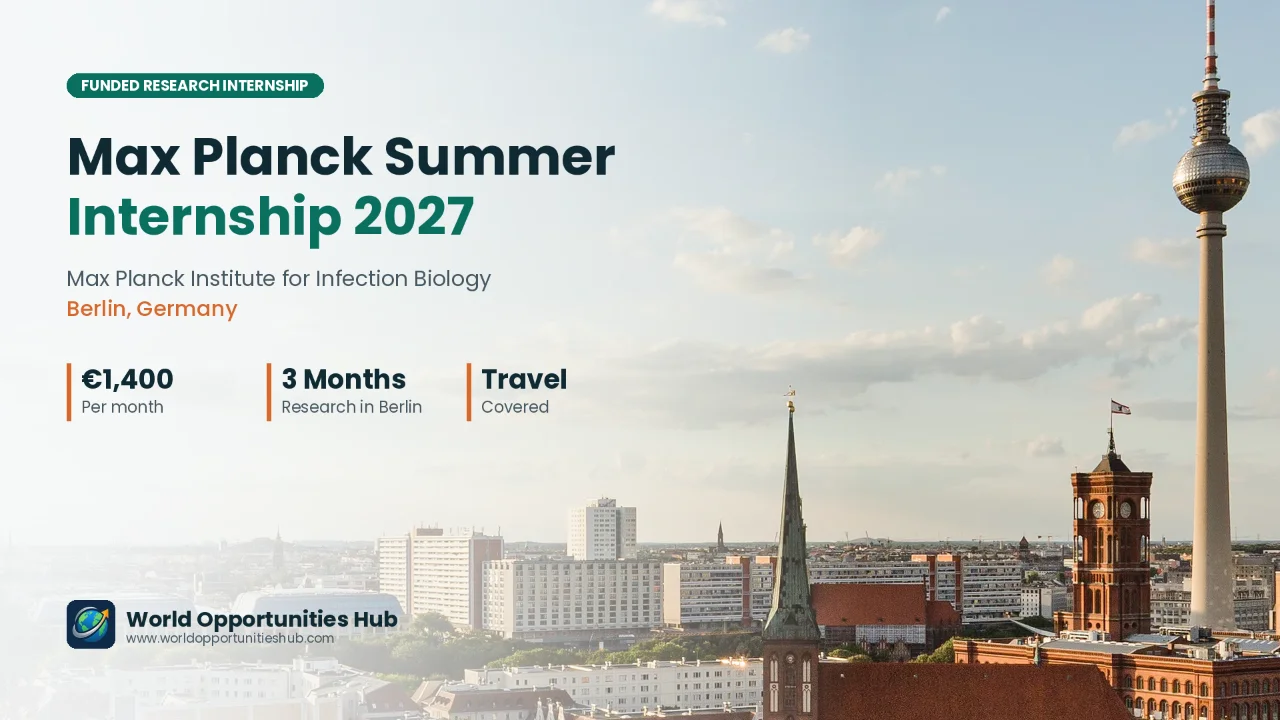
The MPIIB International Summer Internship (MPIIB-ISI) is a three-month funded research internship at the Max Planck Institute for Infection Biology in Berlin. It’s for bachelor’s and master’s students in biology, medicine and related fields who have faced real barriers in their education. Interns work on a research project with experienced scientists and receive a monthly stipend of about €1,400. Travel costs are covered, and the institute helps with accommodation.
Last updated: Nov 4, 2026Source: Max Planck Institute for Infection Biology (MPIIB), Berlin ↗
Overview
Talent is everywhere, but opportunity isn't. Many bright science students never get the chance to work in a world-class lab because of where they live, their financial situation, or other barriers outside their control. The Max Planck Institute for Infection Biology (MPIIB) created its International Summer Internship to change that.
MPIIB is part of the Max Planck Society, one of the most respected research organisations in the world. Its scientists study how infections work, from malaria and tuberculosis to how our immune system fights back. Through MPIIB-ISI, students from around the world spend three months in Berlin working on real research projects with experienced scientists, and get support to prepare for a future PhD.
Who Is This Internship For?
This internship is for you if you:
- Are a bachelor's student (with at least two years completed) or a master's student
- Study biology, medicine, biochemistry, epidemiology or a related subject
- Have strong grades and a real interest in research
- Have faced significant barriers to quality higher education, whether personal, financial, regional or social
- Hope to do a PhD in the future
Students from low- and middle-income countries are especially encouraged to apply.
Why This Internship Stands Out
Most research internships go to students who already have connections or resources. MPIIB-ISI does the opposite. It looks specifically for talented students who haven't had the same access. You get three months inside a Max Planck lab, training designed to prepare you for PhD applications, and a network of scientists in Berlin and beyond. Past interns have described it as life-changing.
What You'll Do During the Internship
- Research: You work full time on a research project under the supervision of an experienced scientist. You apply for a specific project, and you can't propose your own.
- Skills training: You take part in sessions on presenting science, finding a good research question, and preparing a strong PhD application.
- Excursions and networking: You visit other research institutes in Berlin and join social events with fellow interns and scientists.
- Practical support: The institute helps you deal with German administration before and during your stay.
The internship runs from 1 September to 30 November 2027 and takes place in person in Berlin. There's no virtual option.
Research Areas at MPIIB
The institute's research groups cover a wide range of infection biology, including:
- Cellular microbiology
- Innate immunity
- Malaria parasite biology
- Vector biology (how mosquitoes transmit disease)
- Infectious disease epidemiology
- Genetics of host-microbe interactions
- In vivo cell biology of infection
- Quantitative biology
- Visualising immune signalling
Available projects are listed on the internship's Projects page. Read them carefully, because you'll need to explain why you're interested in the specific project you apply for.
What "Facing Difficulties" Means
The program is meant for students whose access to excellent education has been limited. This could be because of:
- Financial reasons: for example, coming from a low-income family or having to work while studying
- Regional reasons: for example, studying in a country or region with few research facilities or opportunities
- Personal reasons: for example, family responsibilities, health or other personal circumstances
- Social reasons: for example, being the first in your family to go to university, or facing discrimination
You can still apply if you haven't faced major barriers, but applicants who have, and who are equally qualified, are preferred. Be honest and specific about your situation in your application, without overstating it.
Understanding the Money
You receive a stipend of about €1,400 per month, which is meant to cover your housing and living costs in Berlin. The institute also covers your travel to and from Berlin. Finding a place to live in Berlin is very hard, so the program offers affordable housing close to the institute. You don't have to take it, but most interns will find it the easiest option.
Visa fees are not covered, and the official pages don't mention health insurance, so check this with the program team once you're accepted.
Tips for a Strong Application
- Choose your project carefully. Read the project descriptions and explain clearly why that particular project interests you and how your skills fit.
- Explain your circumstances honestly. Describe the barriers you've faced and how you've worked around them. This is a key part of what the program looks for.
- Show your research motivation. Mention any lab work, research projects or science activities, even small ones, and say where you hope research will take you.
- Translate your transcripts. They must be in English. Your own translation is fine at the application stage.
- Apply early. The portal closes automatically at midnight CET on the deadline, and late applications aren't accepted.
Eligibility
- Enrolled at a university for the entire internship period (this is needed for the visa)
- Bachelor's students must have completed at least four semesters (two years) by the time they apply
- Master's students are also eligible. Master's graduates who aren't enrolled are not.
- Studying biology, medicine, biochemistry, epidemiology or a related field
- A strong academic record
- Good English skills
- Strong motivation for the program and for the specific project you apply to
- Strong reasons why your access to first-class higher education has been limited (personal, financial, regional or social)
- Available for the full internship, from 1 September to 30 November 2027
- The internship must be voluntary. Students who need it for course credit can't be accepted.
Applicants from low- and middle-income countries are strongly encouraged to apply. The Max Planck Society particularly encourages women and gives preference to applicants with severe disabilities when qualifications are equal.
Benefits / Funding
- A monthly stipend of about €1,400 to cover living costs in Berlin
- Travel costs to and from Berlin covered
- Affordable accommodation arranged close to the institute
- Three months of hands-on research at a Max Planck institute
- Supervision by experienced scientists
- Training to prepare for PhD applications, including presentation skills and application coaching
- Excursions to other Berlin research institutes and social events
- Administrative and visa support from the institute's International Office
- A network of scientists and fellow interns from around the world
Required Documents
Based on past calls, you'll typically need:
- A CV (maximum two pages, using the program's format)
- A motivation letter (using the program's template)
- Academic transcripts for all completed semesters, in English (your own translation is fine at this stage)
- A recommendation letter from a professor or postdoc
- Proof of university enrolment
Check the official Application Guide on the program page for this year's exact list and templates before you start.
How to Apply
- Read the Application Guide and FAQ on the official MPIIB-ISI page.
- Browse the project list and choose the project that best matches your interests and skills.
- Prepare your documents using the program's CV and motivation letter templates.
- Ask a professor or postdoc for your recommendation letter early.
- Complete the online application through the MPIIB-ISI application portal.
- Submit before 27 November 2026. The portal closes automatically at midnight CET.
Selection process:
- Pre-selection: All applications are reviewed and a shortlist is made.
- Online interview: Shortlisted candidates are invited to an online interview.
- Offer: Selected candidates receive an official offer letter by email.
Important Dates
- November 2026: Applications open
- 27 November 2026: Application deadline (midnight CET)
- After the deadline: Applications reviewed and shortlisted candidates interviewed online
- February 2027: Final selection
- 1 March 2027: If you haven't heard by this date, your application wasn't successful
- 1 September 2027: Internship begins in Berlin
- 30 November 2027: Internship ends
FAQs
What is MPIIB-ISI?
It's a three-month funded research internship at the Max Planck Institute for Infection Biology in Berlin. It's designed for talented students who have faced barriers in their education.
Is the internship paid?
Yes. You receive about €1,400 a month, and your travel to and from Berlin is covered.
Is accommodation provided?
The program offers affordable housing close to the institute. You don't have to use it, but it's strongly recommended given how hard it is to find housing in Berlin.
Are visa fees covered?
No. You apply for your own visa, with help from the institute's International Office, and pay the fees yourself.
Can international students apply?
Yes. Students of all nationalities can apply, and those from low- and middle-income countries are strongly encouraged.
Can I apply if I've already finished my master's?
No. You must be enrolled at a university for the entire internship.
Can first-year students apply?
No. Bachelor's students need to have completed at least four semesters when they apply.
My degree isn't in biology. Can I apply?
Possibly. There's no strict list of programs. If your interests match the institute's research and your skills fit the project, you can apply.
Can I propose my own research project?
No. You must work on one of the projects offered in the call.
Can I do the internship online?
No. The internship takes place in person in Berlin.
Can I use this internship for course credit?
No. It must be a voluntary internship.
I haven't faced major difficulties in my education. Can I still apply?
Yes, but applicants with significant barriers and equal qualifications are preferred.
Do my transcripts need to be in English?
Yes. Your own translation is fine for the application, but you'll need official translations if you're accepted.
When will I hear back?
Final decisions are made in February 2027. If you haven't heard by 1 March 2027, your application wasn't successful. Check your spam folder too.
Will I get feedback if I'm not selected?
No. The program doesn't give individual feedback.
WorldOpportunitiesHub is an independent information platform. We are not affiliated with or endorsed by Max Planck Institute for Infection Biology (MPIIB), Berlin. Always verify details on the official website before applying.